
Gold Star Bullion Security Packing
Packing
Packed for the journey the consignment is actually taking, not for the shelf it came off.
How a pallet is built
Nothing is tipped into a box. Each consignment is loaded by hand, case by case, in an order decided by what is in it: dense and rigid at the base, fragile wrapped and carried on top, nothing bearing a load it was not built to bear.
Small items go into boxes before they go onto a pallet. Loose pieces are what get lost at a transhipment, and a boxed piece has an entry on the packing list.
The build, step by step
- Sort by bearing. Position by weight and rigidity, heaviest and squarest at the base.
- Wrap the fragile. Cushioned, then carried at the top of the stack where nothing sits on it.
- Strap. Banding across and around, so the stack behaves as one object under a forklift.
- Corner-bind. Corrugated board on edges and corners where the load justifies it.
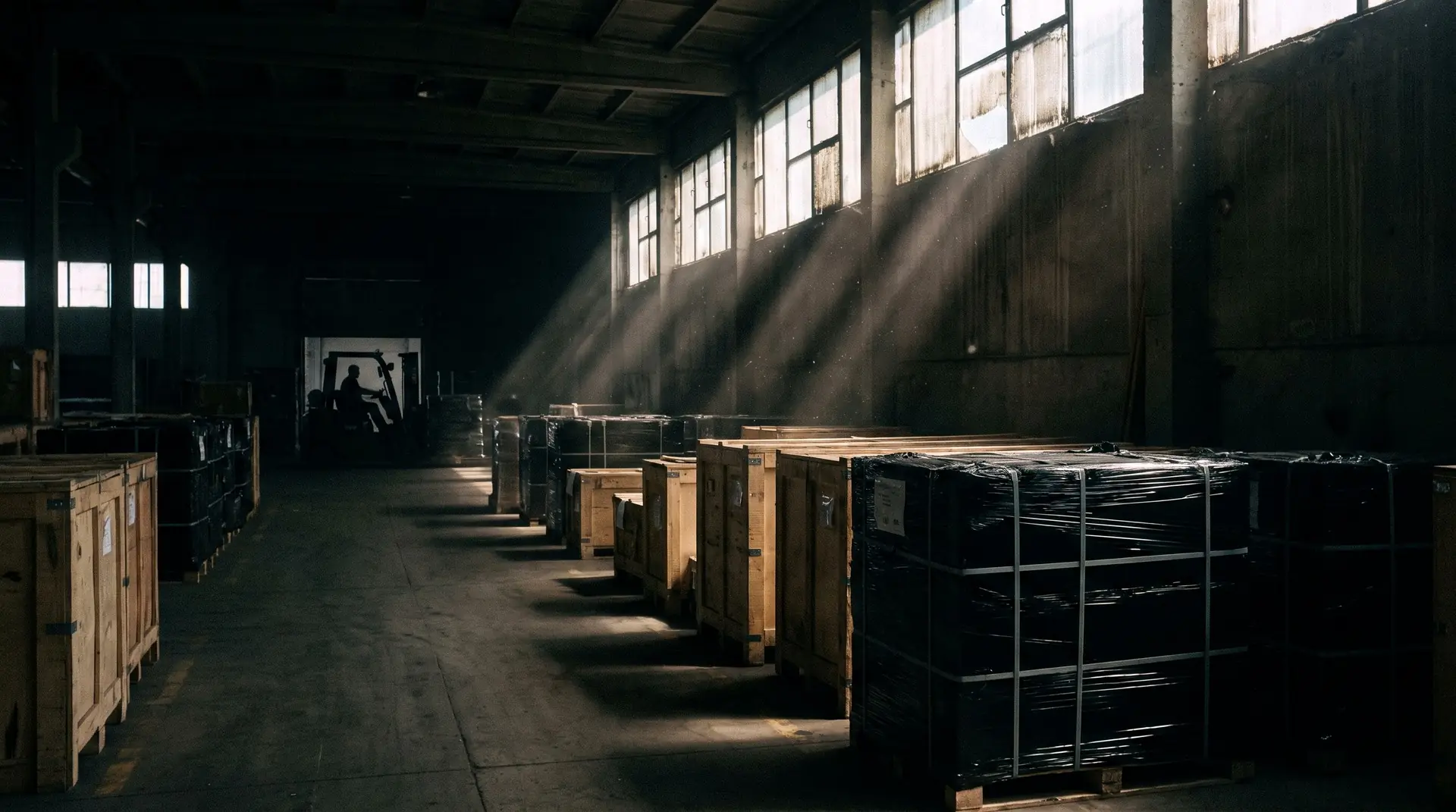
- Shrink-wrap, opaque. Black film does two jobs. It keeps the weather off, and it stops anyone reading the load from across a yard.
- Palletise. On the pallet the consignment can be forked, stacked and manifested as a single unit.
Bullion consignments
Metal is packed to a separate standard: pieces individually identified against the schedule, seals numbered and recorded, and the outer packaging carrying no indication of what is inside. The schedule travels with the consignment and a copy goes on the file.